A burner phone is a cheap prepaid phone you plan to drop
A burner phone is a low-cost prepaid phone, bought without a contract, that you use for a short while and then stop using. The point is distance: the number on it is not the number your bank, your family and your employer know.
Today the word covers two things. The classic version is a physical handset, usually a basic phone, with a prepaid SIM already inside. The modern version is a second phone number inside an app on the phone you already own; Burner's own page says that is what most people mean by it now.
Both share one trait: they are built to be dropped without consequences. The handset goes in a drawer or the bin; the app number gets deleted and a new one picked.
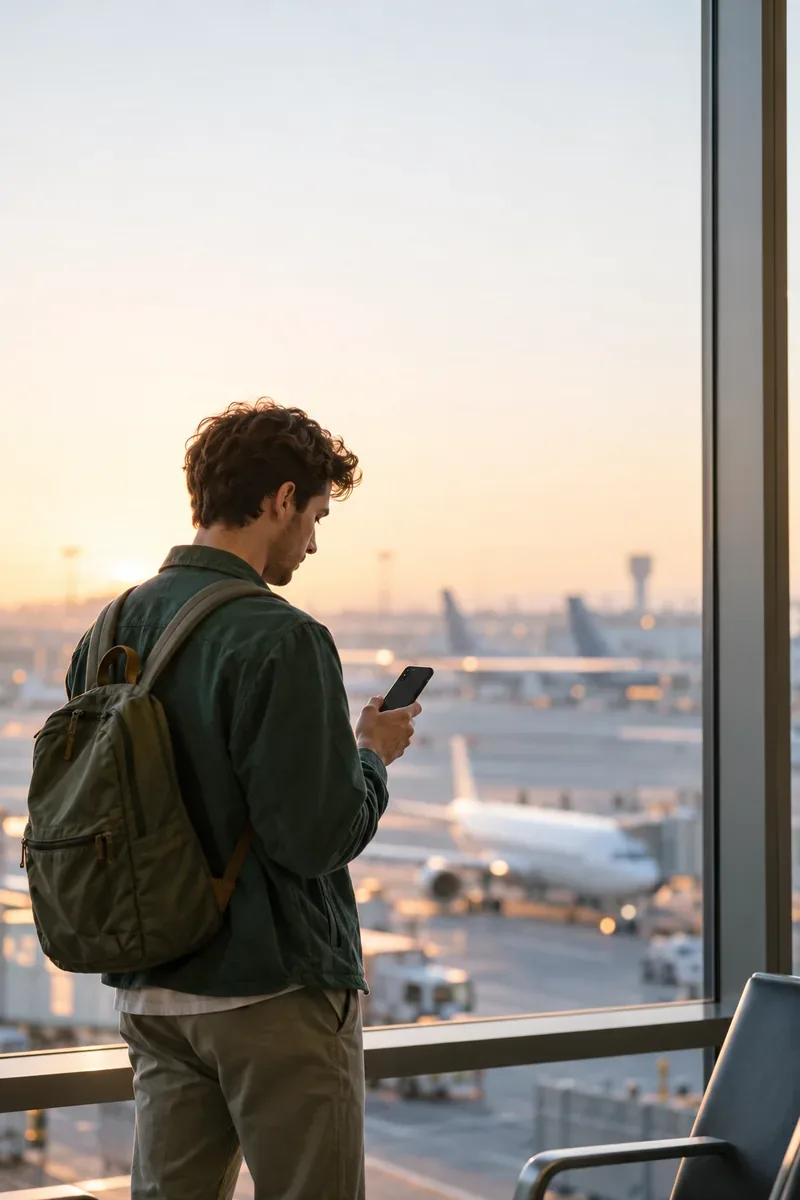
A burner phone is a disposable prepaid mobile phone intended for short-term use before being discarded.
Proton VPN, protonvpn.com/blog/burner-phone
Most people use a burner for strangers, signups and travel
Most people buy a burner phone to keep their real number away from strangers: marketplace buyers, dates, website signups and the spam that follows a signup.
Journalists and people at protests use them for a harder reason: a phone that is seized or searched should give away nothing about their contacts. Proton VPN's guide lists reporters, protesters and travellers as the typical users; Norton's guide adds spam reduction and keeping work contacts away from personal ones.
We think most people over-worry about the handset and under-worry about the habits. A burner you then sign into with your main Google account is just your phone with extra steps.
A burner fits
- Marketplace deals and classified ads
- Online dating before you trust someone
- Website signups that demand a number
- A local number on a trip, to skip roaming
- A spare phone for emergencies
A burner is overkill
- Cutting spam on your main number (a call filter does most of it)
- Keeping your location off apps (phone settings do that)
- Protecting your browsing (that is a VPN's job, not a number's)
A physical burner and a number app protect different things
A prepaid handset separates the whole device from you; a number app separates only the number.
An app number is tied to the account you created it with and to the phone it runs on, so it is a convenience tool, not a shield. A handset bought with cash and never signed into your accounts is a stronger wall, and a lot more hassle.
| Prepaid handset | Second-number app | |
|---|---|---|
| What you buy | A basic phone with a prepaid SIM, often from a Walmart or Amazon listing | A number inside an app on your own phone |
| What stays separate | The whole device: number, IMEI, apps, location | Only the number; the phone, its accounts and its location are still yours |
| Setup time | Minutes at the shelf, then activate with the SIM's airtime | Seconds: pick a number and sign up |
| Calls and texts | Carrier voice and SMS, not encrypted | Routed through the app company's servers; its privacy policy applies |
| Verification codes | Usually works like any mobile number | Often needs a paid 'verified' tier; Burner lists one at $9.99 a month (as of November 2026) |
| Best for | Protests, travel, a spare emergency phone | Dating, selling things, signups |
How much a burner phone costs depends on which kind you pick
A burner phone costs the price of a basic prepaid handset plus the airtime you load onto it; an app number costs nothing to start and a monthly fee for the tiers that do anything useful.
We are not quoting handset prices here because the Walmart and Amazon listings change by the week. The stable pattern is that the cheapest option is a basic phone with the SIM already installed, and a smartphone burner costs several times more. Burner's standard number starts at no charge; its Verified Number tier, the one that receives most verification codes, is $9.99 a month or $59.99 a year as of November 2026.
If the burner is a smartphone, budget for the data side too. Teal VPN, made by Fxolio LLC, has Teal Free (500 MB a day on 2 devices, with nothing asked beyond an email) and Teal Pro at $7.99 a month, $24 for six months or $36 a year, with a 30-day money-back period; apps cover Android, Android TV, Windows, Mac, Linux and Chromebook. Pro covers 10 devices on the yearly plan and 5 on the shorter ones, paid by card, Apple Pay, Google Pay, PayPal or crypto.
- $9.99/mo
- Burner's Verified Number tieror $59.99 a year, from burnerapp.com as of November 2026
- 500 MB a day
- Teal Free on the burner's data side2 devices; an email is all you give
- $36 a year
- Teal Pro if 500 MB is not enough$3 a month billed yearly; $7.99 month to month
A burner phone is traceable the moment it meets your habits
A burner phone is traceable; it only becomes hard to trace when nothing about how you bought it and used it points at you.
The handset has an IMEI, the SIM has its own identity, and the carrier logs which tower both talk to. Norton's guide lists purchase records, location data and the people you call as the usual ways a burner gets linked to its owner.
Cash, a shop you do not normally visit, and a phone that never wakes up at home is the version the guides agree on. For selling a sofa that is more than you need; for the protest and reporting cases it is the whole point.
- Buying it with your bank card or a store loyalty account
- Turning it on at home, next to your main phone, so both register on the same tower
- Signing into your usual Google, Apple or social accounts
- Calling the same people you call from your real number
- Keeping the same number for months
- Using it on your home Wi-Fi, where the router keeps its address
Setting up a burner phone is quick once you decide the rules
Setting up a burner phone is quick; the slow part is deciding the rules you will keep with it.
The steps below are for a prepaid Android handset. A basic phone skips the app step, and a number app skips the shopping and first-power-on steps.
Decide what the burner is for
One purpose per phone. A dating number has looser rules than a phone for a protest, and mixing the two gives you the weaker protection of both.
Buy the handset and SIM in person
Proton VPN's guide recommends cash and as little ID as the shop allows. Many countries ask for ID when a SIM is registered, so check the local rules before you travel. Our separate guide on where to buy a burner phone lists the shelf options.
Switch it on away from home
The first power-on tells the carrier which tower you are under. Do it somewhere you do not normally spend time, with your main phone switched off or left behind.
Keep your real accounts off it
Create a new email on the burner itself. Say no to restoring from a backup, no to contact sync, and no to the apps that already know you.
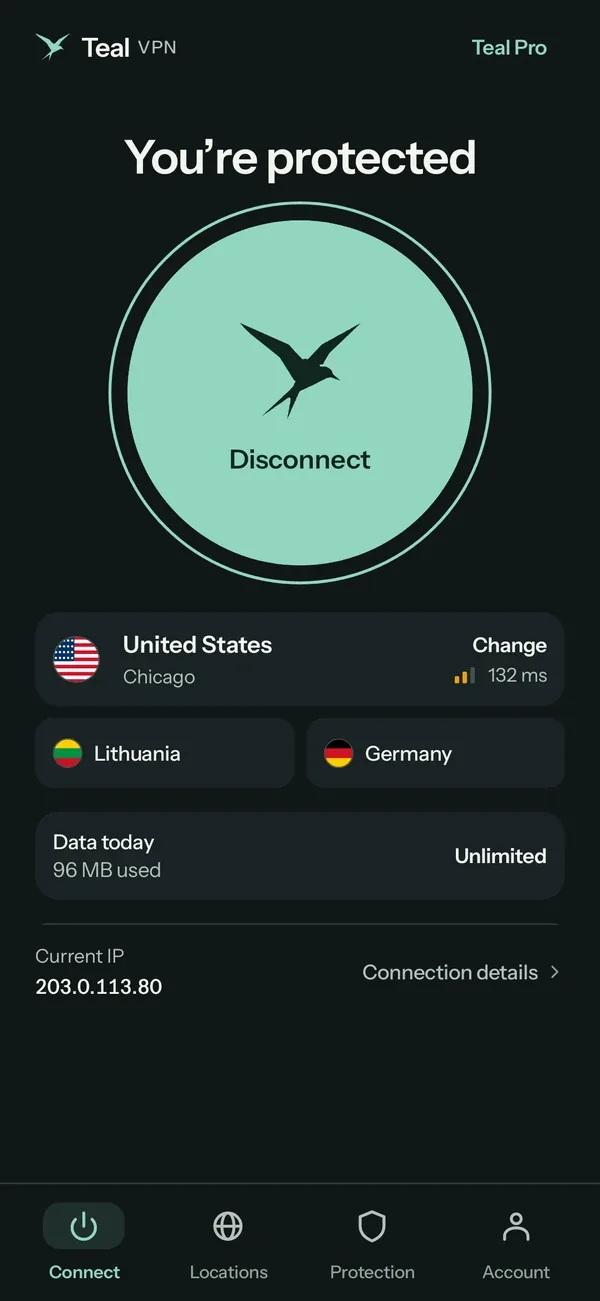
Install Teal Free on an Android burner
Get Teal VPN from the Play Store and sign in with the new email; Teal Free gives 500 MB a day on 2 devices. Teal Secure is obfuscated on every connection, so the burner's traffic looks ordinary on strict networks. Then open tealvpn.com/ip-leak-test on the burner: it shows the public IP and the DNS servers answering lookups, with no sign-in.
Set an end date
Decide now when the number dies: when the deal closes, when the trip ends, when the story runs. Delete the app number or wipe the handset on that day rather than keeping it 'just in case'.
A burner phone needs a VPN only if it goes online
A burner phone needs a VPN only if it is a smartphone that goes online; a basic phone that just calls and texts has nothing for a VPN to protect.
On a smartphone burner, the data side is where you are most exposed: hotel and café Wi-Fi owners can see the sites you reach, and the SIM's carrier sees them too. Teal Secure, Teal VPN's connection mode, is obfuscated on every connection and every plan, and the app tries other routes by itself when a network closes one, which matters on strict networks, for example in China, where other VPNs stop. No VPN is guaranteed to connect on every network, so check the local rules before you travel.
If a burner is more than you want, two cheaper habits cover most people: dial *67 before a call to withhold your caller ID, and use a second-number app for signups. Burner's guide compares *67 with a second number and, unsurprisingly, prefers the number; we think *67 is enough for a one-off call to a seller.
Keep reading
References
- What is a burner phone? How they work and when to use one (Norton)
- What is a burner phone and how do you use it? (Proton VPN)
- What Is a Burner Phone? Second Phone Numbers in 2026 (Burner)
Need help with Teal? Contact support.
Questions
What is a burner phone and what does it do?
A burner phone is a prepaid phone, or a second number in an app, used for a short time so strangers, websites and spammers get a number you can drop. It keeps your main number out of circulation; it does not protect your internet traffic or your identity by itself.
How does a burner phone work?
A prepaid SIM comes with paid-up minutes, texts and data, so there is no contract and no monthly bill in your name. You activate it, use it until the airtime or the need runs out, then stop. App numbers do the same in software: the app routes calls and texts through its servers to your phone.
Are burner phones legal?
Owning a prepaid phone is ordinary in most places, but rules on registering a SIM with ID differ by country and change, so check the local rules before you travel. What you do with the phone is what matters; the Norton and Proton VPN guides both note that criminals use them too.
Can a burner phone be tracked?
Yes. The carrier sees which towers the phone uses, the purchase can be matched to a bank card or a store camera, and signing into your real accounts ties it to you at once. Cash, a new email and never switching it on at home make tracing hard; the phone itself does not.
How long does a burner phone last?
As long as the airtime stays loaded and the carrier keeps the number active; prepaid numbers lapse after a period of no use that the carrier sets. Most people pick their own end date: the deal is done, the trip is over, the number gets deleted.
Is a burner phone app safe?
Safe enough for dating and selling. Your calls and texts pass through the app company's servers, so read its privacy policy and pay for the tier you need; Burner's Verified Number is $9.99 a month as of November 2026. It is not the tool for protest or reporting cases, because the number is tied to the account and phone it was created on.
Does a VPN make a burner phone untraceable?
No. Teal VPN, like any VPN, encrypts the internet traffic leaving the phone and changes the IP address websites see; it does nothing for the SIM, the IMEI or the cell towers. Use it for the Wi-Fi and data side, and use buying and usage habits for the rest.